

 10 articles
League of Legends’ Challenges system is Riot’s in-game achievement progression tracker that gives you something to hunt beyond ranked.
With this system, you’re rewarded for hitting specific skill or playstyle milestones, and all of this shows up on your profile, in the lobby, and on the loading screen.
This way, people can actually see the hours you put in. Here, we’re going to look at how challenges work in League of Legends and the rewards you can expect to get.
How Challenges Work and Rewards You Can Get in League of Legends
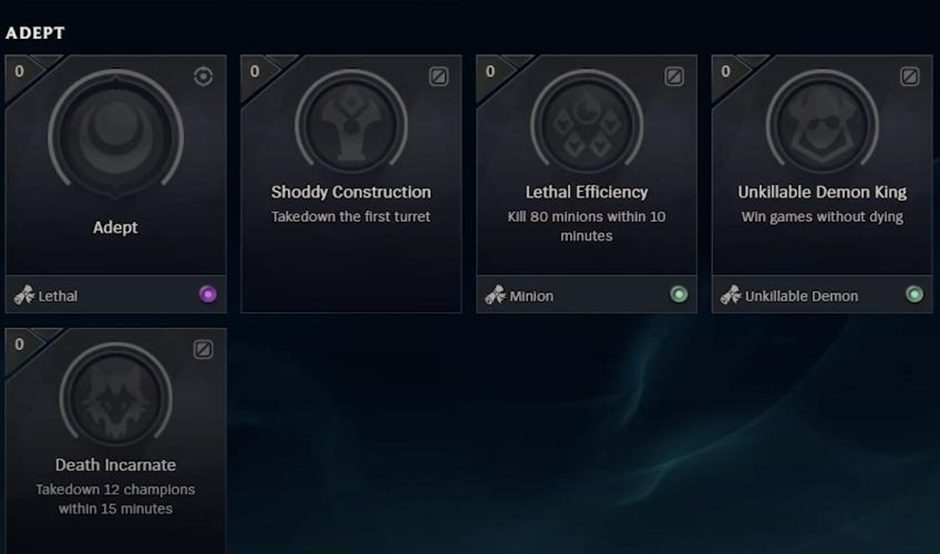
Challenges are essentially achievement cards you can complete by meeting performance or activity goals during games.
 League of Legends: Ultimate Rengar Build and Runes Guide for Season 14Aug 27, 2025
 League of Legends: How to Fix “Unexpected Login Error”Apr 21, 2023
 League of Legends: How to Play Akali in Season 13 | Build GuideMar 22, 2023
Each challenge has a criteria you need to meet, like getting a certain number of takedowns in a time window or winning specific types of games. Once you complete certain objectives, you earn Challenge Points that increase that challenge’s rank, from Iron all the way to Challenger.
You don’t need to buy them or pay anything. Simply play the game and hit the goals while you’re at it.
In fact, most of them will auto-track in the client as long as you’re playing supported game modes like Summoner’s Rift or ARAM.
That said, challenges are grouped into five main categories, and all except Legacy contribute to your Challenge Crystal. These are:
- Expertise – Tests pure gameplay skill in matches
- Teamwork & Strategy – Requires coordinated plays with your team
- Imagination – Often about innovative play or unusual objectives
- Veterancy – Tracks lifetime statistics such as cumulative kills or gold
- Collection – About collecting champions, cosmetics, and loot
There’s also a Legacy category, but these challenges are time-limited and don’t count toward your Crystal rank. They’re basically for bragging rights if you got them when they were active.
How to Complete a Challenge
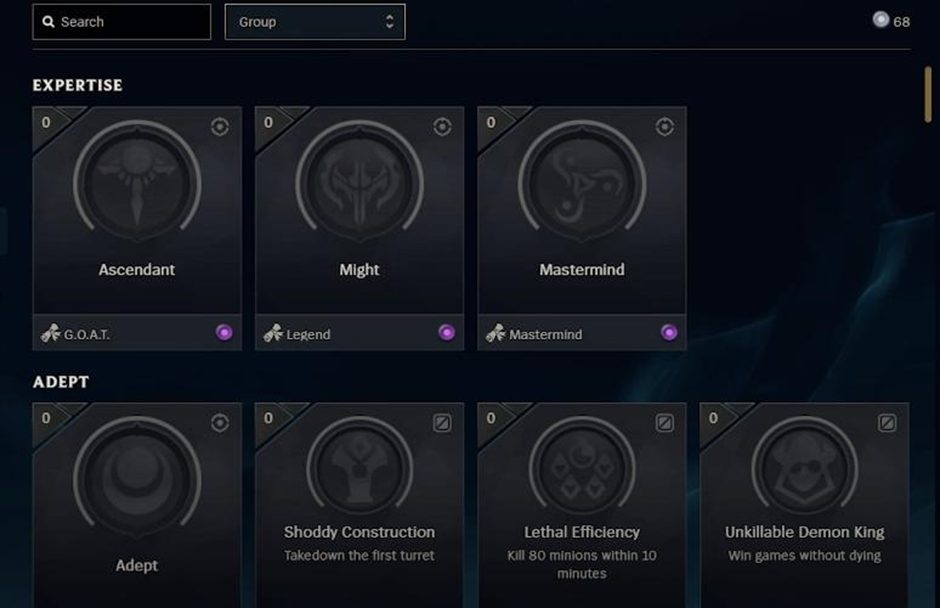
Each challenge appears as a card in the Challenges UI.
The card shows what you need to do, how many points you’ll earn toward your total when you rank it up, and what reward you’ll unlock at certain tiers.
By progressing a challenge, you fill up that card’s rank, and higher tiers are harder to achieve.
Challenges also roll up into Capstones, which are like group quests. You can’t max out a Capstone until all the smaller challenges under it are completed.
Conquering a Capstone adds more points and pushes your Crystal rank further.
Once you hit Master tier on a given challenge, you open the door to competing on regional leaderboards. Players who hit Master can climb into Grandmaster or Challenger for that challenge.
However, only a tiny percentage of players actually make those spots, and Riot recalculates positions daily.
Rewards for Completing Challenges
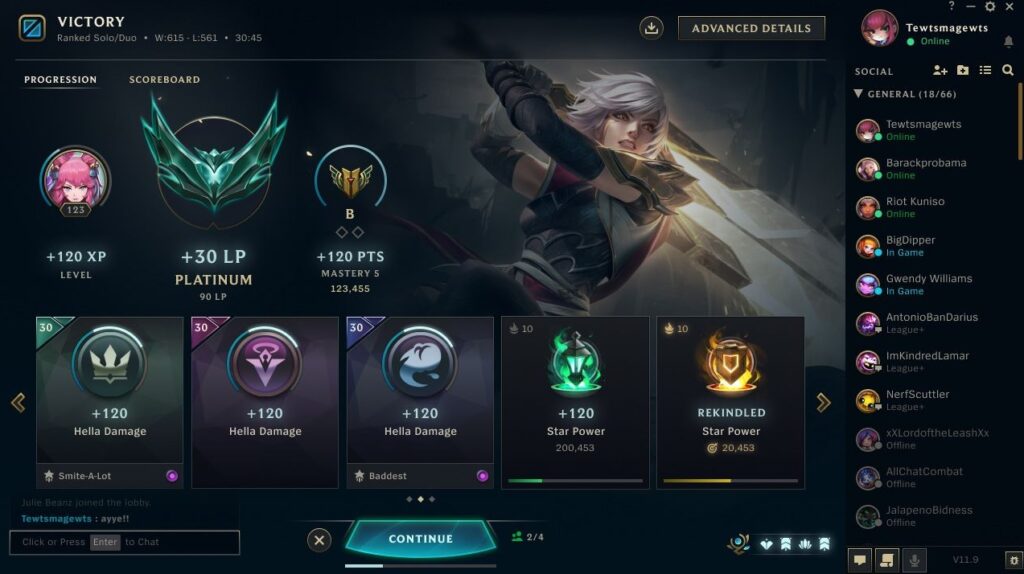
There are three major reward types tied to Challenges.
First are Challenge Points, which are the core currency of progression. They build up your category totals and contribute toward your Crystal rank, which is displayed under your banner and on loading screens.
Second are Tokens. Each challenge gives a unique token you can equip on your profile. You can show up to three at a time, and they change color based on how far you’ve ranked the challenge.
The third one are Titles. As you hit specific ranks on certain challenges, you unlock titles you can equip. Titles show up next to your name in the client and in matches, letting you show off specific accomplishments.
Every Challenge card shows you the points it’s worth at the current rank. You don’t jump from zero to full points immediately.
Hitting each tier boosts your Challenge Points incrementally, and these stack up across categories to push your Crystal higher.
ALSO READ: ARK Survival Evolved: How to Find All 11 Artifacts