


Chromite is one of the many useful resources you can get in Palworld, so it’s important to know the best locations to get it as of version 1.0.
Chromite is practically exclusive to the Feybreak region. It’s mainly used to make Hexolite, which is used to make many late-game buildings. That said, Feybreak is pretty big, so it’s not exactly easy to find!
In this guide, I’ll tell you the best spots to farm Chromite with ease.
The Best Locations for Chromite in Palworld 1.0
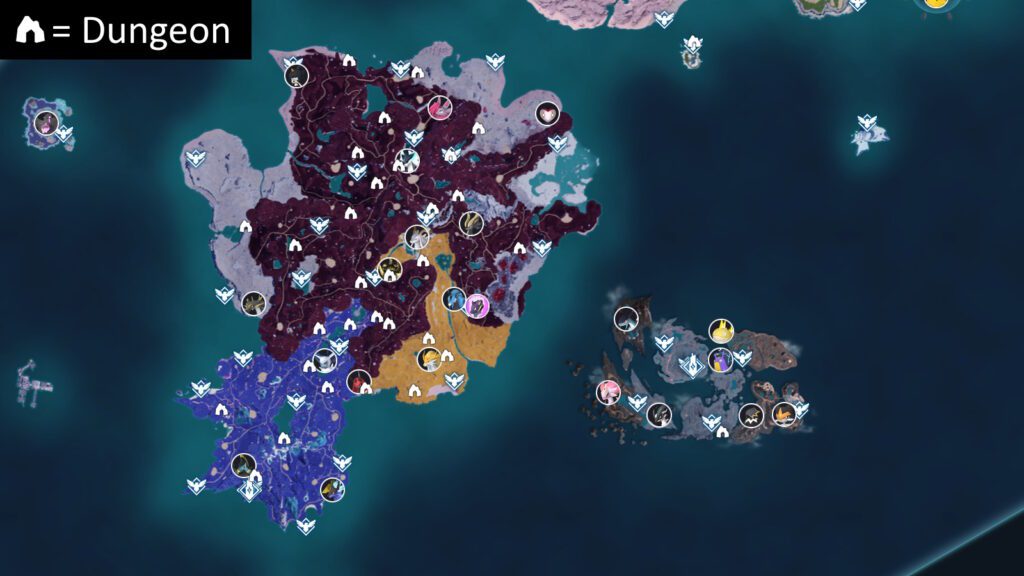
If you want to get lots of Chromite as of version 1.0, you really just need to go to any of the dungeons in the Feybreak region. The map above shows all of their locations.
Now, do note that the general rules for dungeons still apply in this region. That means that dungeons occasionally switch between being locked or open, and their layouts can vary.
As such, you really just need to check the various marked spots until you find an open dungeon you can visit. They are, by far, the best spots to find Chromite deposits!
That said, you can also find Chromite on the surface as you explore Feybreak. Keep an eye out for them as you look for the dungeons, since that will help you get some more Chromite.

To make things much easier, I highly recommend bringing a Smokie with you. You can conveniently find these Pals all over Feybreak during the day and night, as well.
Smokie’s Partner Skill, “Dig, Smokie! Dig!”, makes the grind for Chromite a lot smoother, for two reasons.
First, activating it will scan the nearby area and mark any Chromite deposits for you, making them easier to find. Additionally, having Smokie out while you dig Chromite will make you get up to +200% more Chromite!
If you want to make the most of this Partner Skill, make sure to Condense Smokie up to Rank 4. For that, check out the Condensation section of our perfect Pal guide.
So, there you have it! In summary, the best locations to get Chromite in Palworld 1.0 are all of the dungeons in the Feybreak region. Bring a Smokie with you to make nodes easier to find, and also get more drops per node. It’s as simple as that!






Found another tip?
Share your extra strategy, correction, or question below. Helpful comments can make this guide better for everyone.