

 108 articles
With the Invaders of Oakveil update for V Rising, the game now offers more viable build combinations than before.
Not only that, but it added a whole lot of new enemies, more endgame content, base-related refinements, opportunities for friendly PVP in bases, a handful of weapons, spell changes, and so much more.
If you’re new to the game, however, it can be a bit overwhelming. To help you with that, I have prepared two beginner-friendly PvE builds that should help you progress smoothly from the early to midgame.
Let’s take a look at what these are.
 Best PVE Spells to Use in V Rising 1.1May 18, 2025
 Best Loot Spots in V Rising 1.1 OakveilMay 15, 2025
 V Rising 1.1: Best Boss Killing BuildMay 16, 2026
Two PvE Builds for Easy Progression in V Rising
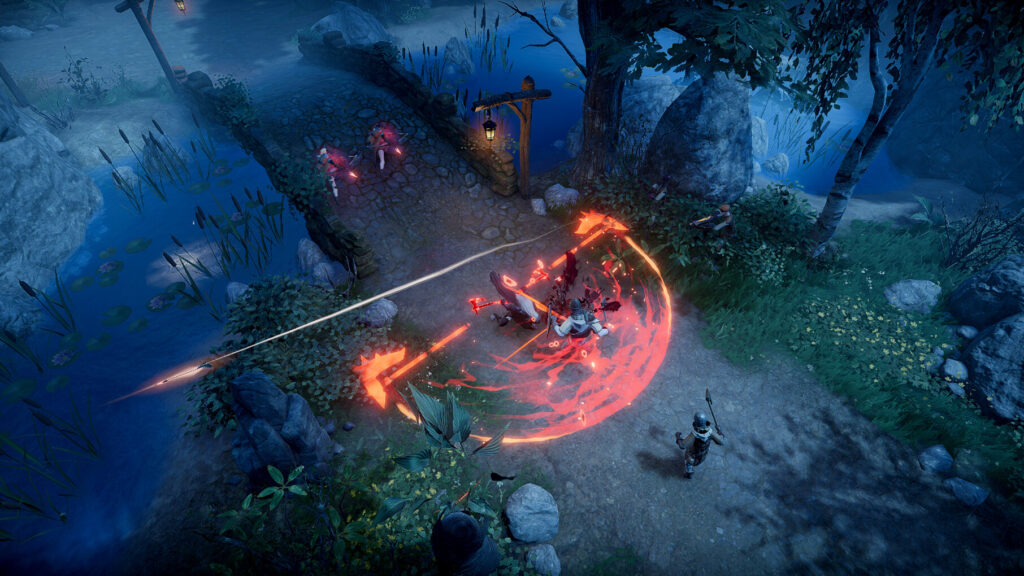
Before you get started, just know that this is mainly just a bunch of recommendations of what you can use at the start of the game, up until you move up towards mid to late game content.
These are just loadouts and not necessarily a progression guide.
If you are looking for a guide for progressing through the game itself, you can instead check out our guide on how to progress through V Rising’s 1.1 update as a solo player or duo group. This guide should give you a general list of guidelines from the early game all the way to when you start getting a whiff of the new Oakveil content.
Now, let us get to the “builds”, which are really just ability setups and a few gear recommendations that might help you breeze through early game content if you learn how to maximize their effectiveness.
Build 1 – Ward of the Damned Focused Build
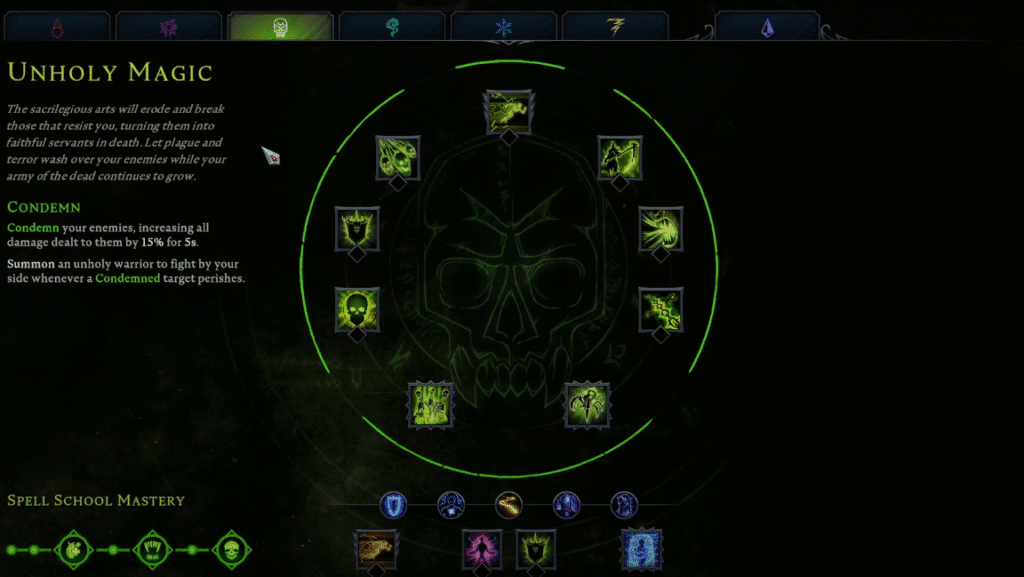
This build revolves around Ward of the Damned, combined with aggressive sustain and summon pressure. Even after the later balance adjustments, it still remains one of the safest and most forgiving PvE setups in the game.
For this, you want to have Ward of the Damned alongside your preferred secondary skill and veil. The main idea here is that Ward of the Damned not only provides you with a bit of protection, but it is also a very potent summoning ability.
Ward of the Damned still provides exceptional defensive value as it blocks incoming attacks while giving you a chance to summon skeletons whenever you successfully absorb damage. However, the summon rate is lower than older versions of the build, though it’s incredibly effective during early and mid-game content.
Pair it with Corrupted Skull for a much smoother progression. Corrupted Skull applies Condemn, summons additional skeletons, and gives you strong ranged pressure without requiring much setup.
The double charge system also makes it extremely efficient during boss encounters.
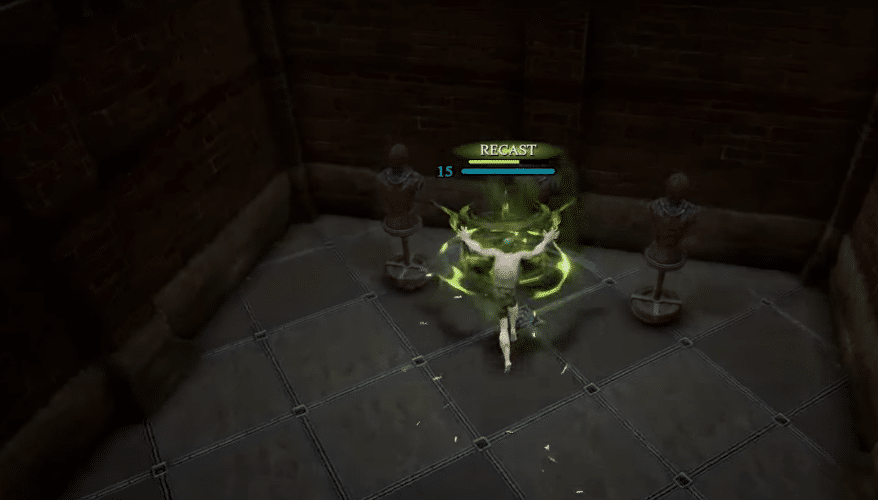
The main appeal of this barrier is that it has a chance of summoning skeletons whenever it blocks an attack. Although it has been nerfed from the old days, when it could make an entire army in a second, it is still insanely good for PvE content.
Make sure to get this spell as early as possible. Of course, this is not going to help your damage output too much, which is why you pair it with more offensive spells.
For your veil, you’d want Veil of Blood as it’s still the safest overall option early on, thanks to its sustain. That said, Veil of Chaos has become increasingly popular after the recent mobility adjustments because the additional repositioning helps avoid large boss attacks much more consistently.
Build 2 – Ranged Storm Build
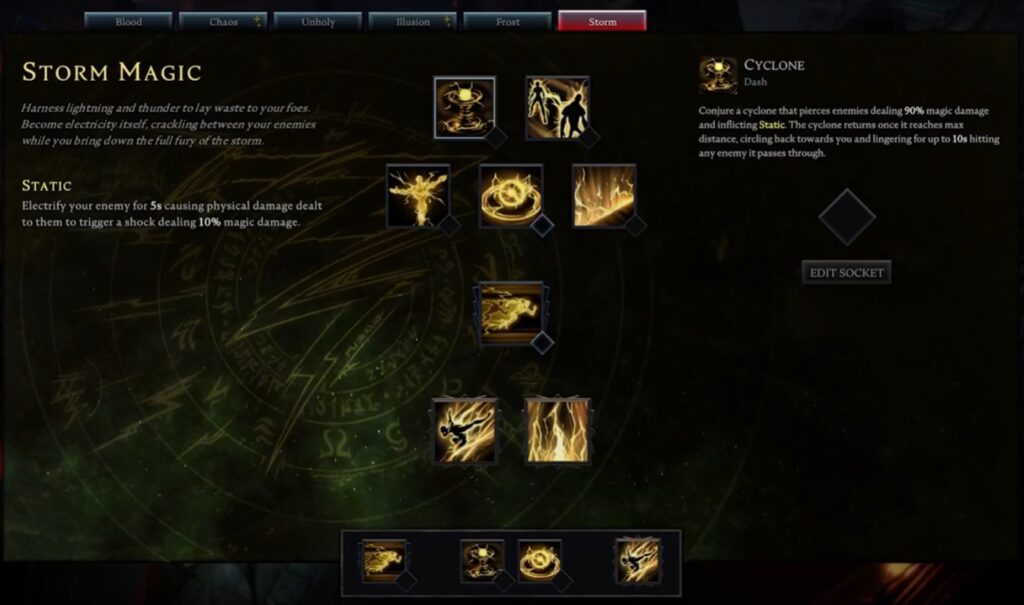
If you prefer faster and more aggressive gameplay, a Storm-focused ranged buildup is currently one of the strongest PvE options after the Oakveil balance updates.
Instead of relying entirely on your summons, this build focuses on sustained ranged damage, mobility, and constant spell uptime.
For this, your core abilities will be Ball Lightning and Power Surge.
Ball Lightning has become one of the most efficient PvE clearing spells in 1.1 because of its lingering area damage and excellent scaling. It performs especially well against clustered enemies and stationary bosses.
Meanwhile, Power Surge complements this perfectly by boosting your movement and attack while also enabling Ignite synergies. For weapons, you want to go for Longbow or Pistols because they let you continuously pressure enemies while your Storm abilities deal passive damage in the background.
If survivability becomes an issue, swap Power Surge for Phantom Aegis or Frost Barrier. Both options provide much stronger defensive utility for solo progression while still maintaining good offensive tempo.
For the Veil, you can go for Veil of Storm as it got better thanks to its updated dash responsiveness and mobility improvements. Unlike the previous build, this one rewards an aggressive and mobile playstyle. Once properly geared, it’s capable of even faster clearing speed.
Some Gear Recommendations
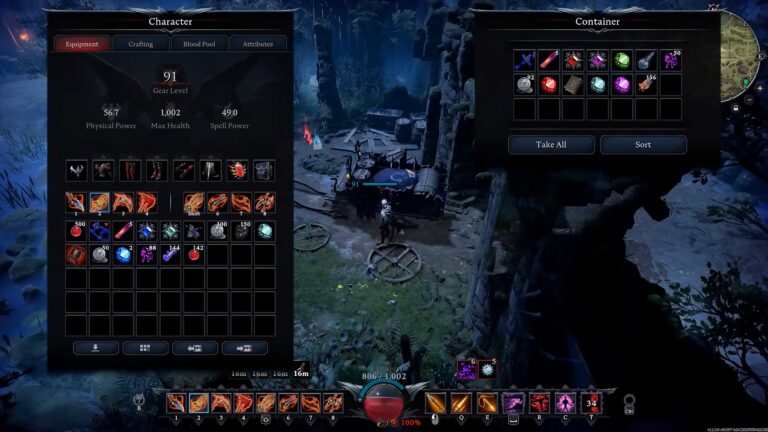
As far as gear goes, you just progress through the tiers normally. Grim ranger or Warlock gear will be nice early on depending on your preferred damage type. This early in the game, though, you do not need to sweat it too much, so just work with what you can get.
As you move up to iron armor, which is after you are done with your Hollowfang armor set, focus on either Blood Hunter or Dark Magus sets depending on your damage type.
If you are looking for pure mobility, mixing either of them with two Duskwatcher pieces will help.
This is because Duskwatcher’s set bonus at two pieces gives you a small movement speed boost. If you do not mind running just a little slower than before, then just go for a full set of damage buffs as mentioned above.
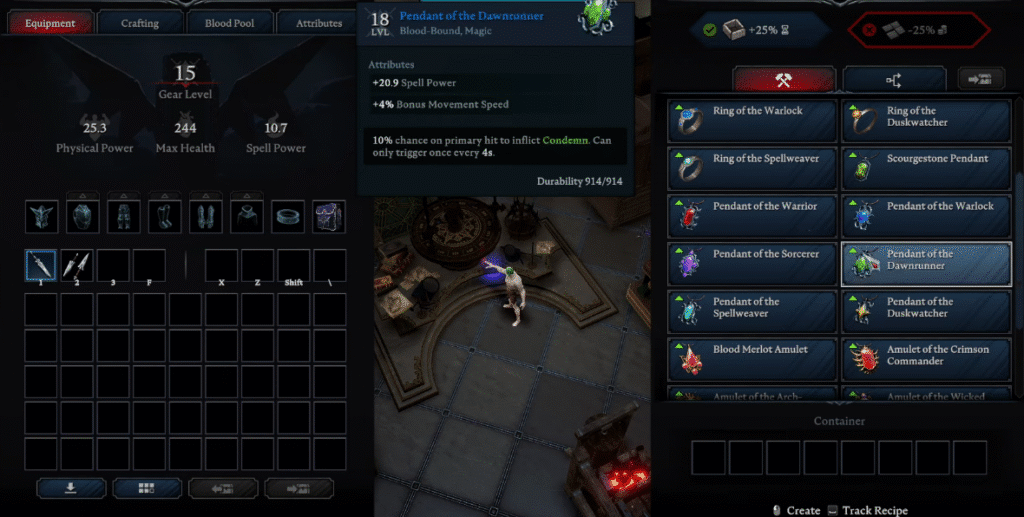
In terms of jewelry, try your best to rush your very first Scourgestone pendant. This will open up various other options that have varying modifiers aside from spell power. This boils down to personal preference, since there are so many to choose from.
Pendant of the Dawnrunner is great for any playstyle, as it gives you a small chance to inflict Condemn with any primary hit. It also provides you with a small movement speed buff, which is always nice to have.
For physical builds, Pendant of the Duskwatcher or Pendant of the Warrior are decent options too as they both increase your damage output in varying ways. Pendant of the Sorcerer may be good for mages, though if you already spam ignite effects, this might feel a bit redundant.
Final Thoughts
And those are the suggestions that most people tend to recommend for fast early game progression. As you approach the later stages of V Rising, you should already be more knowledgeable of the game’s mechanics and have figured out your own personal build.
These will merely help you get a more structured build path through the first few regions of the game.
Once you unlock more spells and points, many other options open up to you, and you will have already developed a distinct playstyle that you can easily deviate from these recommendations.
If you are just returning and stumbled into a community that does friendly PVP using the update’s fresh features, check out our guide on how to use throwing daggers and claws in V Rising 1.1 PVP for a bit of advice on the shiny new weapons that were introduced to the game.